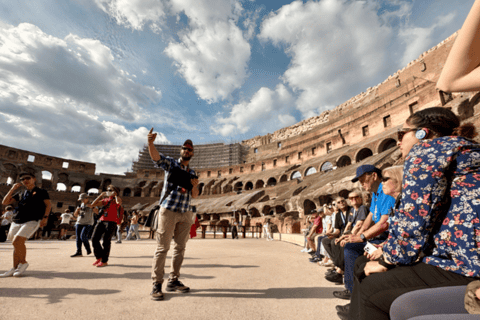
Colosseum Arena Floor, Palatine & Forum Guided Tour
A popular choice if you specifically want Arena Floor access plus a guided visit covering the Colosseum, Roman Forum and Palatine Hill.
Book Colosseum Arena tours and tickets for 2026. Compare arena-floor access, guided tours, and combined Colosseum, Roman Forum and Palatine Hill visits so you can choose the right experience before booking.
A popular choice if you specifically want Arena Floor access plus a guided visit covering the Colosseum, Roman Forum and Palatine Hill.
This site is independent and not the official Colosseum website. Some links are affiliate links, and we may earn a commission at no extra cost to you. We help you compare arena access, ticket type, inclusions and tour format.
Compare three of the most-reviewed Colosseum Arena Floor experiences below. These options are ordered by traveller review count and focus on tours that include or specifically offer arena-floor access. Compare tour format, Ancient Rome sites included, traveller feedback, and current starting price before booking.
1
Most reviewed
★★★★★ 4.53 · 28,139 reviews
The most-reviewed Arena Floor option in this selection. It combines guided Colosseum arena access with the Roman Forum and Palatine Hill, making it a strong choice if you want the arena experience together with a broader introduction to Ancient Rome.
2
Arena tour
★★★★★ 4.72 · 2,654 reviews
A highly rated Arena Floor tour combining the Colosseum with the Roman Forum and Palatine Hill. Consider this option if arena access is essential but you also want the main archaeological sites of Ancient Rome included in the same experience.
3
Arena option
★★★★★ 4.71 · 2,563 reviews
Another popular Colosseum experience associated with Arena access and Ancient Rome sightseeing. It combines the Colosseum with the Roman Forum and Palatine Hill, giving travellers another guided option when comparing available Arena Floor routes.
These three popular Colosseum Arena experiences differ mainly by tour format, price, and how the Arena Floor is combined with the Roman Forum and Palatine Hill. Compare traveller ratings, review volume, included sites, and the main reason to choose each option before booking.
| Option | From | Rating | Reviews | Format | Includes | Best for |
|---|---|---|---|---|---|---|
| Rome: Colosseum Arena Floor, Palatine & Forum Guided Tour Most-reviewed Arena Floor experience in this comparison. | €39 | 4.53 | 28,139 | Guided Arena tour | Colosseum Arena Floor, Roman Forum and Palatine Hill | Travellers who specifically want Arena Floor access together with a guided introduction to the main Ancient Rome archaeological sites. |
| Rome: Colosseum Arena Floor, Roman Forum & Palatine Tour Highly rated Arena Floor option with Forum and Palatine included. | €35 | 4.72 | 2,654 | Arena Floor tour | Colosseum Arena Floor, Roman Forum and Palatine Hill | Visitors looking for Arena Floor access at a lower supplied starting price while still covering the major Ancient Rome sites. |
| Colosseum Guided Tour with Roman Forum & Palatine Hill Popular guided Ancient Rome tour with an Arena-related booking option. | €39 | 4.71 | 2,563 | Guided tour | Colosseum, Roman Forum and Palatine Hill; check the selected option for Arena access | Travellers comparing a guided Colosseum and Ancient Rome experience who want the flexibility to check the available Arena option before booking. |
These Colosseum options differ by access zone, guide style, and how much time you want to spend. Answer four quick questions to narrow them down.
We will narrow these Colosseum options to the closest match.
Pick the option that fits your access needs first. Price matters, but it should not override arena access or the guide format you want.
Colosseum Arena tickets can look similar while covering different areas and routes. Check these details before you pay, so you know which entrance to use, what is included, and whether the option fits your visit.
Arena tickets do not all include the same areas
One listing may cover the arena floor only, while another includes the usual Colosseum levels as well. If you assume the wrong one, you can pay for less access than you wanted.
Fix: Check the inclusions line for the exact ticket name before booking. Look for arena, underground, first and second levels, Forum, and Palatine separately, and do not treat a general Colosseum ticket as an arena ticket.
The arena floor uses a separate entrance
A Colosseum ticket does not always start at the same place. Arena-floor access uses the Stern Spur side, while ordinary entry follows a different route. Going to the wrong entrance can waste your timed slot.
Fix: Save the meeting or entrance point shown on your booking, not the general Colosseum map pin. Check whether your option uses the Stern Spur side or the main visitor entrance before you leave.
Your booked time is fixed, not flexible
Colosseum entry is tied to the time on the ticket. If you arrive late, you may miss the slot and lose the visit, even if the ticket is still for the same day.
Fix: Check the entry time and any check-in time shown on the voucher. Plan to arrive early enough to clear security and reach the correct point without rushing, especially if you are using a combined Forum or Palatine ticket.
The audio guide may need your own phone
The entry and audio guide option is not the same as a live guided tour. If you expect a guide to lead the group, or you do not have a charged phone and headphones, the visit can feel very different from what you bought.
Fix: Check whether the listing says audio guide, live guide, or both. If it uses your phone, make sure your battery is charged and bring headphones before you go.
This section covers the practical details that shape a Colosseum Arena visit. Use it for timing, entrances, bags, accessibility, facilities, and the rules that can affect entry.
The Colosseum opens at 08:30, and last admission changes by date.
For 29 March to 30 September 2026, the site is open until 19:15, with last admission at 18:15. From 1 October to 24 October 2026, it closes at 18:30, with last admission at 17:30. From 25 October 2026 to 28 February 2027, it closes at 16:30, with last admission at 15:30.
There is a live official conflict for September: one page shows 19:15 and another shows 19:00. Recheck the same-day page before you go.
The Roman Forum and Palatine open at 09:00. That matters if you want to split the day between the arena and the open-air ruins.
Late arrivals can lose the slot. The booked Colosseum time is fixed, so plan to be early enough for security and the correct entrance.
The ordinary Colosseum ticket allows 75 minutes inside, and Full Experience tickets allow 90 minutes.
The standard Colosseum, Roman Forum and Palatine ticket gives one timed Colosseum entry and one Forum-Palatine entry within 24 hours. The Colosseum portion has a maximum stay of 75 minutes.
Only Arena gives a 20-minute arena-floor visit. Full Experience Arena and Full Experience Underground + Arena allow up to 90 minutes inside the Colosseum.
Forum and Palatine usually need more time than the arena itself. If you want to walk both areas properly, allow a separate half day rather than trying to rush them.
The main planning point is simple: the arena is the timed core, but the Forum and Palatine add the extra walking. Start early if you want the whole visit without pressure.
No. The ordinary €18 ticket does not include arena access.
The normal Colosseum, Roman Forum and Palatine ticket includes the first and second levels, panoramic terraces, the Colosseum Museum, the Roman Forum, the Roman Forum Museum, Palatine, and current exhibitions. It does not include the arena floor or the underground.
If you want the arena, you need a ticket that says so by name. Only Arena, Full Experience Arena, and Full Experience Underground + Arena are the product types that include it.
This is the main point people miss when they compare listings. A normal Colosseum ticket is a full visit to the monument, but it is not an arena ticket.
If standing on the arena matters, check the inclusions line before you buy. The ticket name alone is not enough.
Arena access uses the Sperone Stern side, not the ordinary main visitor route.
The official arena-floor entrance is the Stern Spur / Sperone Stern side. Ordinary Colosseum entry uses the main visitor entrance near the Valadier Spur and the Arch of Constantine.
This matters because the wrong gate can cost you time. The Colosseum has more than one access point, and arena tickets do not all start from the same place.
Roman Forum and Palatine access points can also differ by ticket. Common points include Arch of Titus, Largo della Salara Vecchia, and Via di San Gregorio.
Use the entrance named on your booking, not the general map pin. That is the safest way to avoid missing a timed slot.
No. The booked Colosseum time is fixed, and the site does not let you enter at a different time.
Official visitor rules say you cannot enter the Colosseum at a different time from the one booked. There is no general grace period published for late arrivals.
The best plan is to arrive about 15 minutes early for standard entry. That gives you time for security and the walk to the correct gate.
Some products have separate check-in logic, but the core rule stays the same: the timed slot controls entry. If you miss it, the ticket may not work.
That is why the entrance, the meeting point, and the time all matter together. You need all three before you leave your hotel.
Large backpacks, suitcases, trolleys, and glass bottles are not allowed.
Current rules prohibit large backpacks, suitcases, and trolleys that exceed the permitted limit. They also prohibit glass bottles.
The official rules do not give a simple universal size in the current text, so do not guess one. If your bag is large, plan as if it will be refused.
There is no verified cloakroom for large luggage at the Colosseum. Do not count on storing a suitcase at the gate.
Travel light if you can. A small day bag is easier for security and far easier on the Forum and Palatine paths.
Security screening is mandatory, and prohibited items include knives, selfie sticks, drones, and tripods.
All visitors pass scanner controls and metal detectors. Security checks do not disappear for faster tickets or arena access.
Prohibited items include firearms, blades, knives, selfie sticks, tripods, drones, trekking poles, spray or gas cans, and laser pointers.
Professional cameras, microphones, mixers, and similar equipment need formal authorisation. Bicycles, scooters, and other vehicles are also not allowed in visitor areas.
These rules matter because the arena visit starts with controlled access. Even a good ticket will not help if a banned item slows you down at the gate.
Yes. The Colosseum has toilets, accessible facilities, baby-changing points, and a refreshment point.
The Colosseum has multiple toilets, including accessible facilities. Official information also lists 14 toilets on the first tier.
Baby-changing stations are available in selected park restrooms and Colosseum visitor facilities. The museum services also list a refreshment point, plus a bookshop and visitor information.
That does not mean you can eat anywhere inside the archaeological areas. Use the facilities that are set up for it and keep food rules in mind.
If you are combining the Colosseum with the Forum and Palatine, use the toilets before you move on. Those open-air areas are larger and less convenient for quick breaks.
Parts of the Colosseum are accessible, but the full arena, Forum, and Palatine route is not fully step-free.
The Colosseum has an accessible route covering much of the first tier, with lift access to the second tier. The Stern Spur entrance is also listed as accessible.
The park says underground access can use a freight elevator for visitors with mobility needs. Roman Forum and Palatine accessible entrances include Largo della Salara Vecchia, Arch of Titus, and Via di San Gregorio.
That still does not make the whole complex flat. The Forum and Palatine have slopes, uneven paving, and ancient steps, and higher Palatine areas can be harder to reach.
If mobility matters, check the exact product and the current lift status before you book. Arena and underground access can change by route and by day.
The arena and the nearby ruins are different parts of one visit, and the Forum and Palatine often take longer than the Colosseum itself.
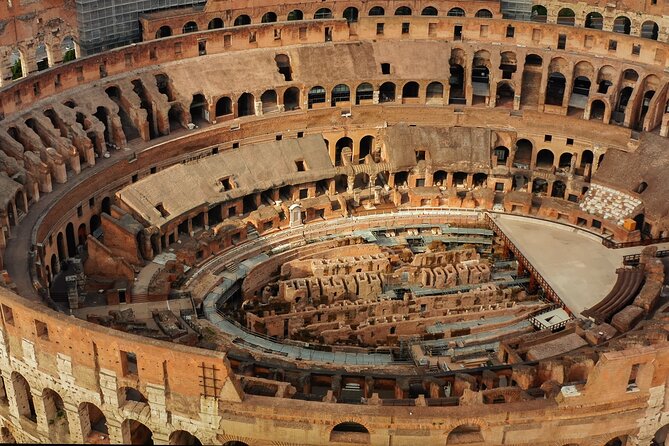
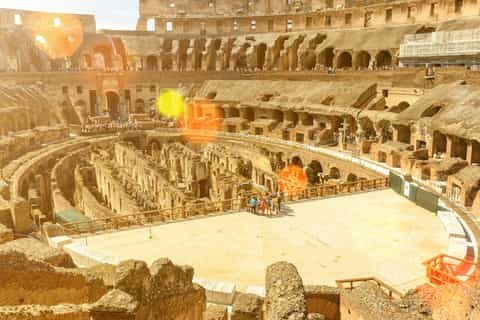
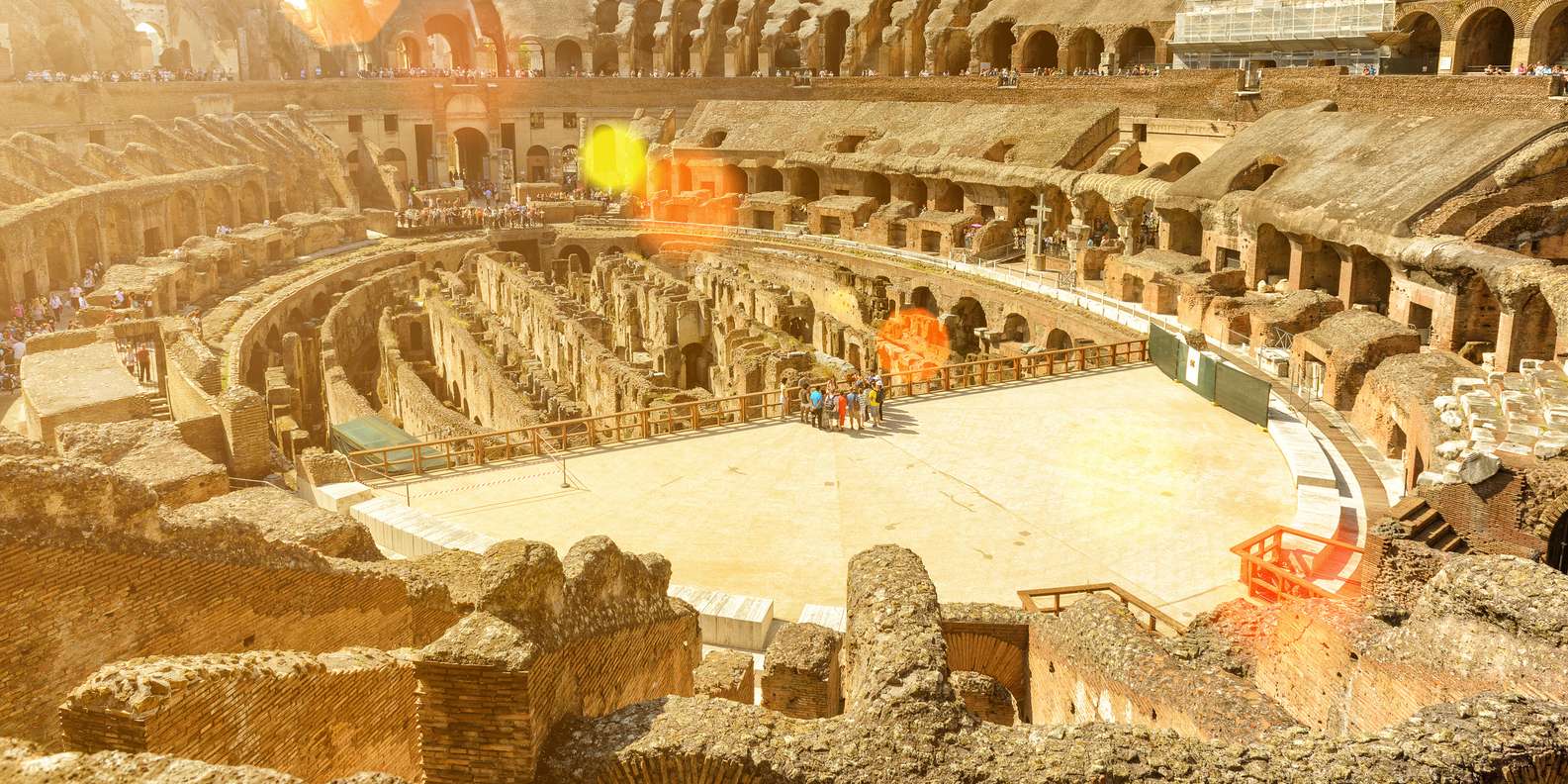
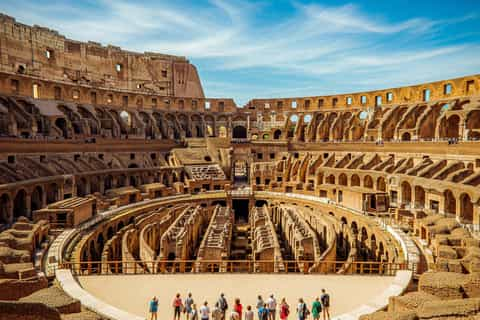
The arena floor gives a central view of the seating, inner walls, and the space below. The Forum and Palatine are open-air ruins with rocky paths, slopes, and uneven paving.
Ordinary Colosseum tickets let you visit the Forum and Palatine before or after your timed Colosseum entry within the valid window. You do not need to force the visit into one sequence if your ticket allows both.
The main planning choice is pacing. A quick arena visit can feel short, but the adjacent archaeological areas reward slower walking and more time.
That is why many visitors treat the Colosseum as the timed part and the Forum-Palatine walk as the longer half of the day.
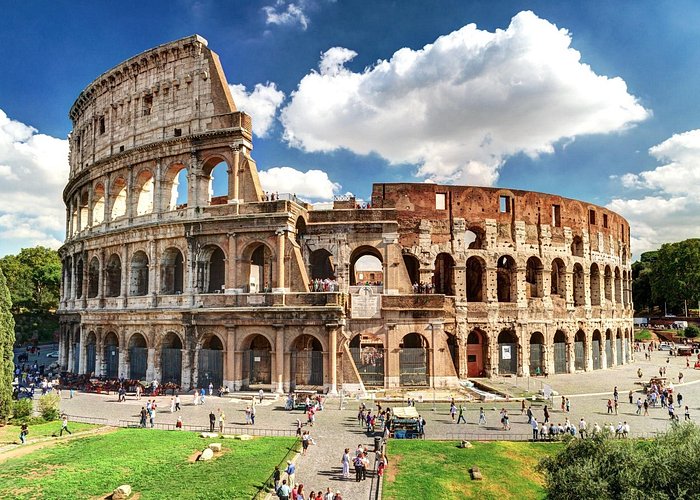
The Colosseum is impressive from outside, but its design becomes clearer when you look across the arena. The space where the spectacles took place, the passages beneath it, and the seating above it each had a different purpose. Together, they controlled what spectators saw, how performers entered, and where people sat.
Today, much of the ancient arena floor is gone, leaving the underground structures visible from above. That exposed view gives you an unusual chance to see both sides of a Roman spectacle: the performance space and the work required to make it function.
Look from the arena toward the seats, then down into the underground. You are seeing the stage, the audience, and the machinery of the show in one view.
The arena was the Colosseum’s central performance space. Gladiatorial contests and animal hunts took place here, in full view of spectators seated around the oval. Its position mattered: wherever someone sat, their attention was directed toward the action below.
If your ticket includes arena access, pause and look upward before taking photographs. From this level, the rising tiers make the audience’s perspective easier to imagine. Then look toward the exposed underground. In antiquity, a floor separated these working spaces from the spectacle above; visitors now see parts of the system that spectators would not have seen.
The underground was a working area for preparing spectacles. Beneath the arena were corridors and equipment used to move people, animals, and scenery. Trapdoors in the floor allowed them to appear in the performance space, while lifts and platforms helped create entrances that could surprise the crowd.
The underground did not stay the same throughout the Colosseum’s history. Its early structures were made of wood for the amphitheatre’s inauguration in AD 80. Under Emperor Domitian, they were rebuilt in masonry. Fourteen corridors are visible today on either side of a large central passage, showing just how much space the operation required.
From above, try to follow the central corridor before looking at the smaller passages branching from it. This makes the remains easier to understand. They are the working level beneath what was once a continuous arena floor, rather than separate rooms built for visitors to explore.
The seating area, known as the cavea, reflected Roman social hierarchy. Senators sat closest to the arena, while other groups occupied different sections farther back and higher up. The emperor had a prominent position on the amphitheatre’s short axis. A seat was therefore more than a place to watch: its location showed a spectator’s standing in Roman society.
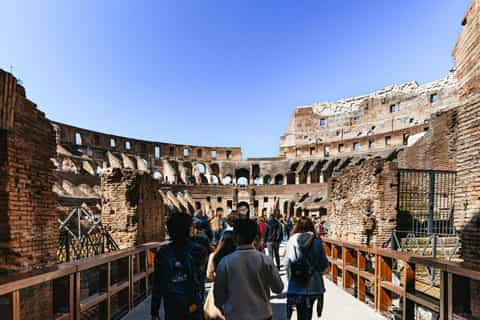
The building also had to move large crowds. Numbered entrance arches, internal routes, stairs, and barriers guided spectators toward their assigned sections. As you walk through the surviving passages, notice how the route repeatedly leads you from a corridor toward a view of the arena. Crowd movement was part of the architectural plan.
Begin with the oval. Notice how the seating wraps around a single focal point. Next, look down at the exposed underground and picture an arena floor covering it. Finally, examine the routes between the outer arches and the seats. These three observations reveal how the Colosseum worked as both a venue for performances and a building designed to manage its audience.
Check your ticket before planning to enter the arena floor or underground. These are distinct visitor areas, and access depends on the option you book. You can still understand much of the relationship between the arena, underground, and seating from viewpoints included in other Colosseum visits.
No. Your Colosseum entry is tied to the booked time slot.
Plan to arrive about 15 minutes early so you can clear security and reach the correct entrance on time.
No. Main Colosseum tickets give one entry at the booked time.
Once you leave, you should not expect to re-enter the Colosseum on the same ticket.
No. The ordinary ticket covers the main Colosseum route, Forum, and Palatine, but not the arena floor.
If you want arena access, choose a ticket that names the arena explicitly.
No. Only Arena gives the arena floor only inside the Colosseum.
It does not give the normal first- and second-level visitor circuit.
Yes. Arena access does not mean underground access.
You need a ticket that explicitly includes underground if that area matters to you.
Yes. The main combined ticket lets you use the Forum and Palatine within the ticket’s validity window.
You can often do that before or after your timed Colosseum entry.
Yes, if it is small enough to meet the site rules. Large backpacks, suitcases, and trolleys are not allowed.
Do not assume there is luggage storage on site. That is not verified here.
Water in a non-glass bottle is the safer choice. Glass bottles are not allowed.
Do not plan a picnic inside the archaeological areas. Eat outside unless your booking or visit rules say otherwise.
No. Selfie sticks are prohibited, and tripods or other professional setups need formal authorization.
Handheld personal photos are the safe default. Keep gear simple if you want to avoid trouble at security.
It depends on the exact ticket and route. The park has accessible entrances and a lift for some areas.
Check the current access details for your product before booking, because route access can vary.
No, not usually. Free days generally do not include arena or underground access.
Special routes are often closed on free-admission days, so check the live notice before you plan around one.